


How AI is disrupting digital marketing agencies is not a question agencies need to research anymore. It is visible in your client relationships right now: in the briefs that arrive pre-populated with AI drafts, in the campaign ideas clients bring to calls having already tested three angles on their own, in the polite but pointed question about whether the retainer still justifies itself. The disruption is not coming. It is already inside the account.
The agencies that are navigating this well share one thing in common. They stopped treating AI as a threat to their writers and started treating it as a signal about where their value actually lives. The ones struggling tend to be caught between two positions: not using AI at all, or using it badly enough that clients notice.
Here are five specific things happening to your clients while many agencies are still running their 2022 production workflow.
1. Clients are producing first drafts faster than your briefing process moves

This one lands quietly at first. A client sends over a draft they describe as “just a rough start” and asks you to refine it. You improve it, return it, and bill the hours. Nobody says anything awkward. But the dynamic has shifted: the client is now setting the creative direction, and you are editing to their taste rather than shaping the strategy.
The briefing and drafting cycle that once took a week can now take a client an afternoon. That does not mean the output is good. It often is not. But speed changes the conversation around value. If a client can produce something plausible in 90 minutes, the question they begin asking, even if only internally, is what the agency’s extra week is buying them.
The answer, if you have one, is almost never the draft. It is the brand knowledge behind the draft: the understanding of which messages have worked before, which audiences responded to what framing, and how this campaign connects to the three that came before it. That institutional memory is where the agency earns its fee. But that memory is only an asset if it is made explicit and actually used in every deliverable.
2. Ad creative is being tested at a volume your team cannot match manually
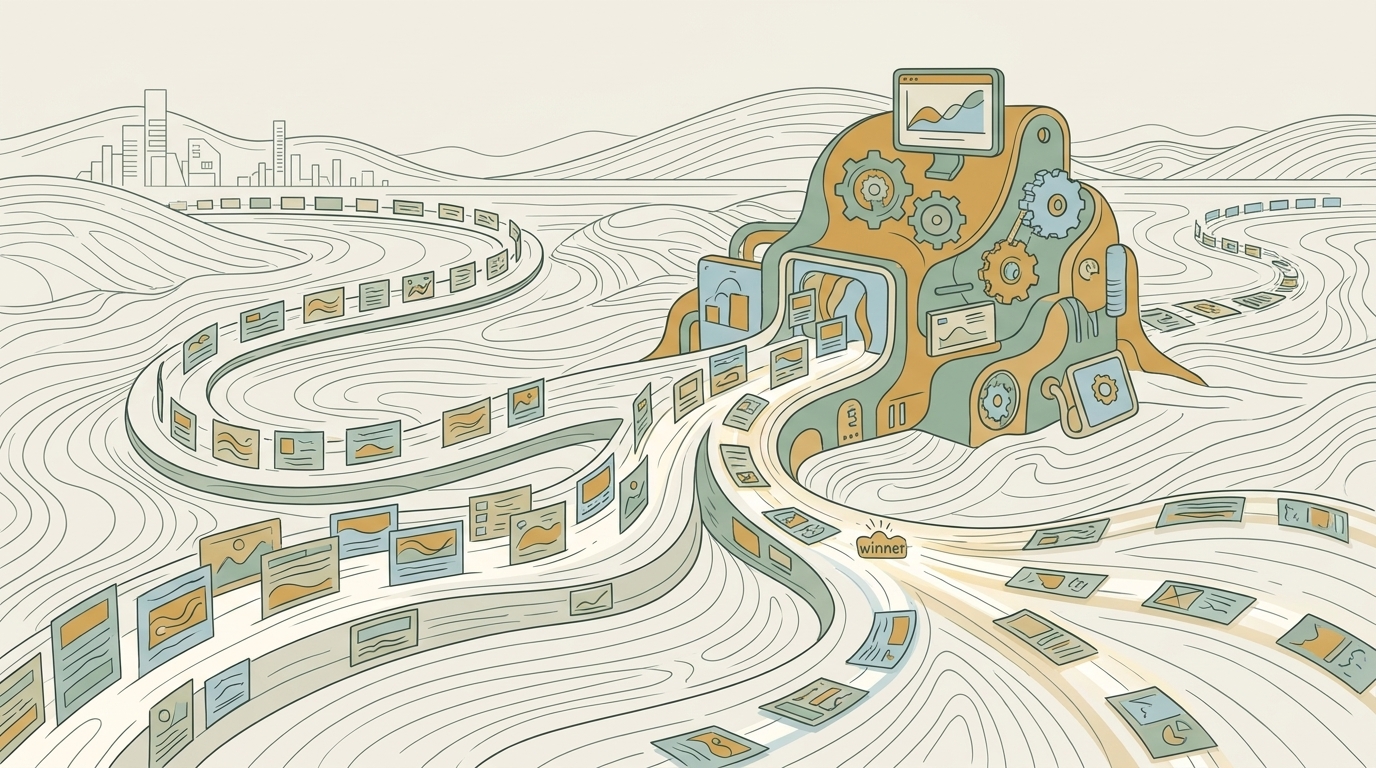
On paid social and search, the platforms themselves have moved toward automated creative optimisation. Clients running campaigns in-house are generating dozens of headline and description variants, letting the algorithm select winners, and then feeding those learnings back into the next round. The creative iteration cycle that once took a month now runs in days.
Agencies that produce three ad variants per brief and call it testing are working at a pace that no longer matches how the platforms actually operate. This is not about working harder. It is about recognising that the unit of creative work has changed. Producing one considered ad is less useful than producing a structured set of variants built around a clear hypothesis about what will resonate with each audience segment.
Where the agency’s edge sits
The hypothesis is the skill. Any tool can generate thirty headlines. Knowing which five are worth testing, why they differ from each other in a meaningful way, and what the results will tell you, that is the strategic layer that clients cannot easily replicate themselves. If your team is not articulating that hypothesis before the campaign runs and reviewing the results after, the creative work is harder to defend at renewal time.
3. How AI is disrupting digital marketing agencies is showing up in content frequency expectations

Clients whose competitors have started publishing two or three pieces of content per week are beginning to ask why their retainer produces four articles a month. The comparison is not always fair, and the content flooding certain niches right now is often thin. But the expectation has shifted, and frequency is being conflated with effort and value.
The agencies absorbing this pressure well are not simply producing more content. They are making the case for a different model: fewer pieces, each built on a clear strategic purpose, supported by genuine brand knowledge and designed to perform over time rather than fill a calendar. That argument holds, but it requires evidence. It requires being able to say: this piece drove qualified traffic for six months, this topic cluster lifted domain authority in this specific area, this campaign reinforced a message we seeded twelve weeks earlier.
Without that kind of documented, recalled strategy, the frequency argument is hard to win. The client sees output per pound spent, and the numbers look worse every quarter.
4. Clients are building brand voice guides with AI and not sharing them with you
This one is easy to miss because it happens quietly, in a Google Doc the client does not think to send over. A founder uses a tool to generate a tone-of-voice document, a messaging framework, a set of approved phrases and things to avoid. It captures something close to how they speak. They share it with their internal team.
Your agency, writing content on the same account, is working from a two-year-old brief and a vague instruction to “keep it friendly but professional.”
The result is content that is technically competent but tonally inconsistent with what the client is producing elsewhere. The client notices. They may not be able to name it, but they feel the disconnect. Over time it erodes confidence in the relationship, not because the work is bad but because it does not feel like it belongs to the same brand.
Brand memory is the answer, not just a better brief
A better intake process helps, but it is not sufficient. What agencies need is a way to make their accumulated knowledge of a client’s brand durable and reusable across every deliverable. The agencies building that capacity now, whether through structured internal systems or through purpose-built tools like Verbolica, are the ones whose work feels coherent three years into a relationship rather than generic. The agent learns from past deliverables and recalls the decisions that shaped them, so each new piece of work starts from the right place rather than from a blank page and a recycled brief.
5. Reporting has become a commodity, and clients know it
Automated reporting was supposed to save agencies time. It has, but it has also made reporting look easy to clients. When a dashboard populates itself and an email summary arrives every Monday, the interpretive work that used to justify the strategy retainer becomes less visible. Clients begin to wonder whether they could just read the dashboard themselves.
The agencies holding their ground on this are doing something the dashboard cannot: connecting the numbers to decisions. Not “impressions were up 14% this month” but “the shift in messaging we made in week two is why cost-per-click dropped, and here is what that tells us about the audience’s current priorities.” That is the analysis that requires genuine familiarity with the campaign history, the brand, and the market context. A dashboard does not have that context. An agency that keeps careful strategic records does.
The reporting conversation is, underneath it all, a conversation about memory and interpretation. Agencies that can demonstrate both are still essential. Agencies that present numbers without narrative are competing on a dimension that tools will always win.
What this means for how agencies need to work
None of these five things require a dramatic response. They do require an honest look at where the agency’s value is currently visible to the client, and where it is being quietly assumed.
Production speed is no longer the argument. Neither is access to tools. The durable value sits in accumulated brand knowledge, strategic interpretation, and the ability to connect each deliverable to a coherent plan that the client recognises as their own. That is what clients are buying when they stay, and it is what they stop believing in when they leave.
Building that capacity takes more than good intentions on a kickoff call. It requires systems that make brand knowledge persistent, that surface relevant decisions from past campaigns before new work starts, and that make it easy for every person working on the account to write from the same informed foundation.
If you are thinking through how your agency should be responding to this moment, the piece on whether your agency should be using AI is a useful place to work through the honest version of that question. And if the question of what to do with your writing team is on the table, the article on whether to replace junior writers with AI approaches it without the usual hype in either direction.
Verbolica is built for exactly the problem this article describes: an agent that carries brand memory across every client, learns from each deliverable, and makes sure the strategic knowledge your agency has built does not stay locked in someone’s head or buried in a folder. If that sounds like the right kind of tool for where your agency is headed, see what the agent actually does or get in touch to talk through your specific setup.